Last updated: February 11, 2026
The way people find information is shifting. ChatGPT now has over 800 million weekly active users — up from 300 million just a year ago. Google's AI Overviews appear in roughly 18% of global searches. Perplexity has crossed 22 million monthly active users. And AI search traffic to websites grew 527% year-over-year in the first half of 2025, according to a study of 19 websites by Previsible.
But here's what the hype often misses: AI search still accounts for less than 1% of total website referral traffic, according to BrightEdge and Conductor data from late 2025. The opportunity isn't about replacing traditional SEO — it's about positioning yourself early in a channel that's growing fast and converts significantly better than organic search.
That's where AI SEO tools come in. The problem is that "AI SEO tool" has become a catch-all term that covers everything from content writers to visibility trackers to keyword researchers. They solve different problems, and picking the wrong category wastes your budget.
This guide breaks down the three distinct types of AI SEO tools, covers the best options in each category, and helps you figure out which ones are worth your time based on what you're actually trying to accomplish.
The 3 Types of AI SEO Tools (And Which One You Need)
Not all AI SEO tools do the same thing. The space has split into three distinct categories, each solving a different problem. Understanding these categories before you buy anything will save you money and frustration.
1. AI Visibility & Tracking Tools
What they do: Monitor whether your brand or website appears in AI-generated responses across platforms like ChatGPT, Claude, Perplexity, and Google AI Overviews.
Who needs them: Any business that wants to know if they're being recommended when people ask AI for suggestions. If someone asks ChatGPT "what's the best project management tool?" and you sell project management software, these tools tell you whether you're showing up in that answer.
The problem they solve: Traditional SEO tools like Google Search Console track your rankings in Google's blue links. They don't tell you anything about whether ChatGPT mentions you, whether Perplexity cites your content, or whether you appear in Google's AI Overviews. You can't optimize what you can't measure.
2. AI Content Optimization Tools
What they do: Analyze and improve your content so AI systems are more likely to understand, cite, and reference it in their responses.
Who needs them: Content teams, publishers, and anyone creating articles, guides, or documentation that should appear in AI-generated answers.
The problem they solve: Writing good content for humans isn't enough anymore. AI systems evaluate content differently — they favor structured formatting, clear factual statements, comprehensive topic coverage, and well-organized headings. Research from Seer Interactive found that 85% of AI Overview citations were published within the last two years, and 50% of Perplexity citations come from content published in 2025 alone. Content optimization tools help you structure your writing so AI platforms can easily extract and cite it.
3. AI Keyword & Prompt Research Tools
What they do: Discover what people are actually asking AI systems, track prompt patterns, and identify keyword opportunities specific to AI search behavior.
Who needs them: SEO strategists planning content around how people use AI search, not just traditional Google queries.
The problem they solve: People don't search AI the same way they search Google. AI queries tend to be longer, more conversational, and more specific. Traditional keyword research tools don't capture these patterns. AI keyword tools help you understand what questions people are asking AI and how to create content that answers them.
| Category | Primary Question | Price Range | Best Starting Point |
|---|---|---|---|
| Visibility & Tracking | "Is AI mentioning my brand?" | Free – $199/mo | Am I Visible on AI? (Free) |
| Content Optimization | "How do I get AI to cite my content?" | $38 – $270/mo | Frase ($38/mo with GEO) |
| Keyword & Prompt Research | "What are people asking AI?" | Free – $50/mo | SparkToro (Free tier) |
Now let's look at the best tools in each category.
Best AI Visibility & Tracking Tools
These tools answer the fundamental question: "Is my brand showing up when people ask AI for recommendations?"
Am I Visible on AI? (Free)
Best for: A free, instant diagnostic of your website's AI readiness.
Am I Visible on AI? takes a different approach from the paid monitoring platforms. Instead of tracking ongoing mentions, it analyzes your website's technical foundation — whether AI crawlers can access your site, whether your content structure is AI-friendly, whether you have the right schema markup, and whether your technical setup supports AI discoverability.
You get a visibility score across four categories (AI Crawler Access, Content Structure, Technical Infrastructure, and Structured Data) along with specific fixes ranked by impact. It checks compatibility across ChatGPT (GPTBot), Claude (ClaudeBot), Perplexity (PerplexityBot), and Gemini.
From analyzing over 10,000 websites, we've found that one of the most common issues is sites accidentally blocking AI crawlers in their robots.txt — often without realizing it. It's a free check that takes 30 seconds, and it catches problems that cost nothing to fix but can completely block your AI visibility.
Pricing: Free
Limitation: It's a diagnostic tool, not an ongoing monitoring platform. It tells you whether AI can find you, not whether AI is mentioning you. For ongoing tracking, you'll want one of the tools below.
Semrush AI Visibility Toolkit
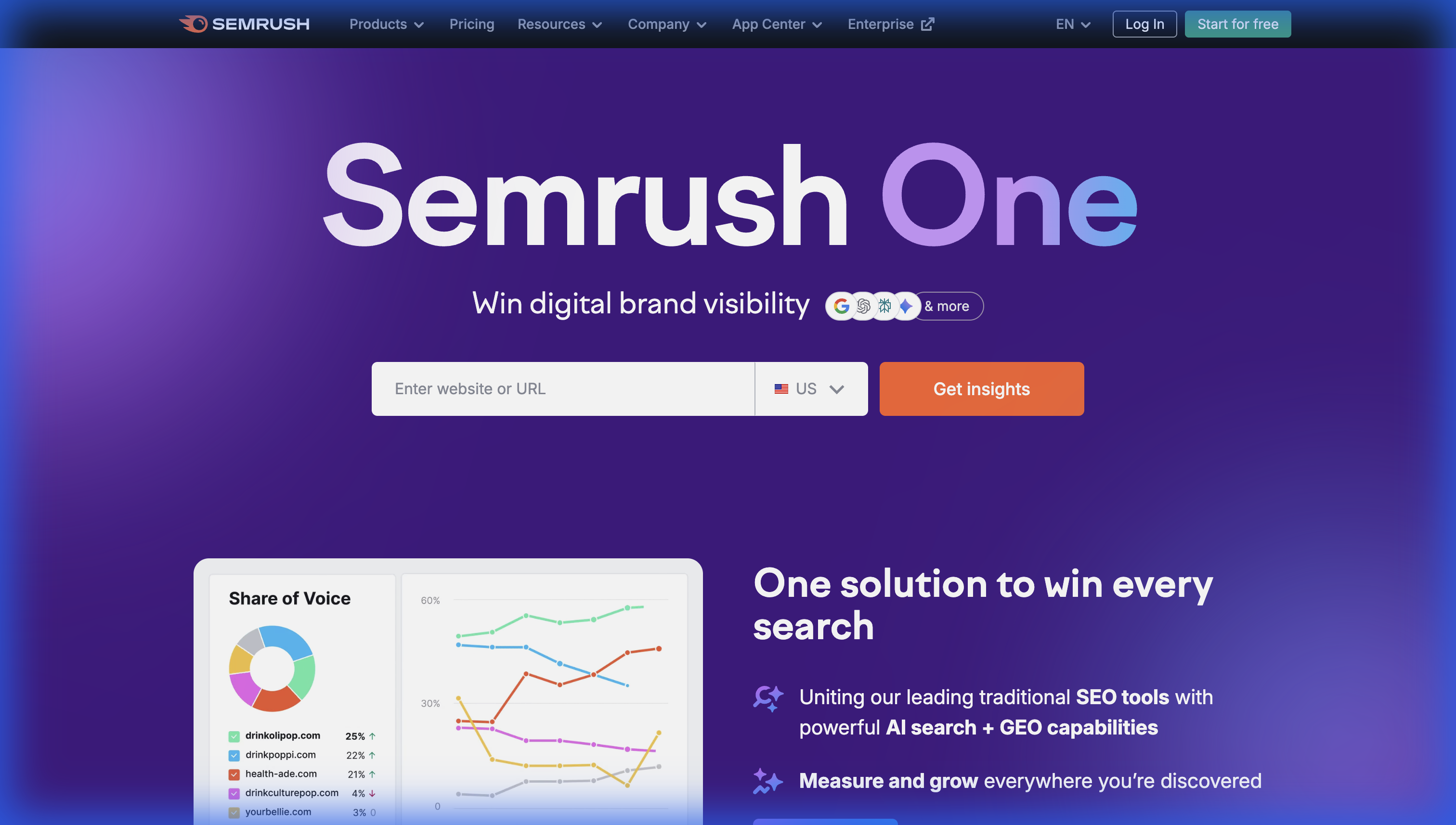
Best for: Teams already using Semrush who want AI visibility data integrated into their existing SEO workflow.
Semrush added AI visibility tracking to its existing platform, which means you get AI mention monitoring alongside your traditional keyword rankings, backlink data, and site audits — all in one dashboard. It tracks mentions across AI Overviews, ChatGPT, and other platforms, with competitor benchmarking and trend analysis.
The advantage is integration. If you already pay for Semrush, this extends your existing toolset without adding another subscription. The disadvantage is that it's part of a large enterprise platform — it's overkill if AI visibility tracking is the only thing you need.
Pricing: Included in Semrush plans (starting ~$130/month)
Best for: Existing Semrush users, larger marketing teams
Otterly.ai
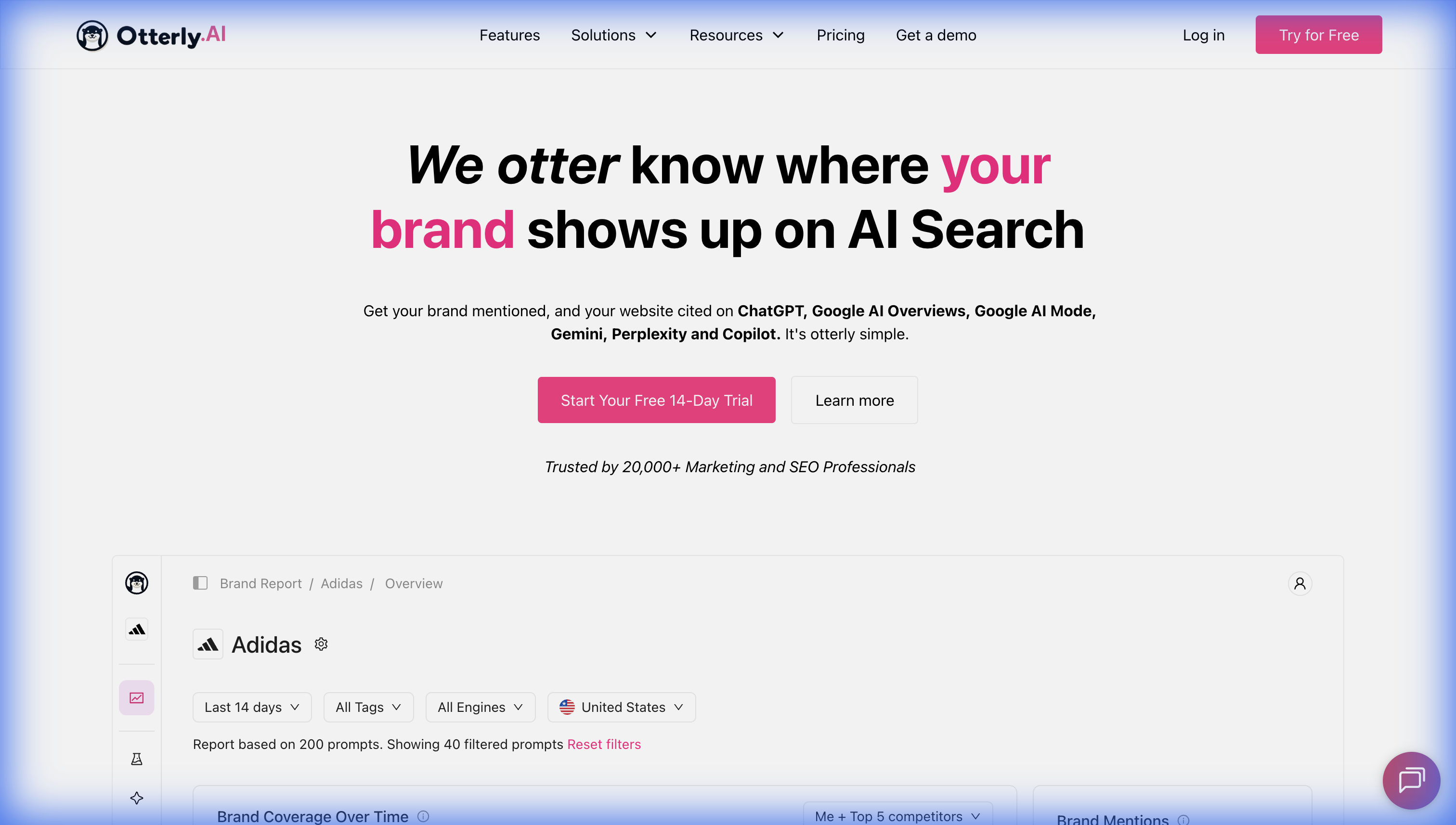
Best for: Mid-market teams wanting dedicated AI search monitoring with prompt-level tracking.
Otterly focuses specifically on AI search monitoring. It tracks your visibility across ChatGPT, Perplexity, Google AI Overviews, and other platforms, with dashboards that show performance at the prompt level — meaning you can see exactly which questions trigger your brand appearing (or not appearing).
Their blog content strategy is also worth studying: they've built significant organic traffic through practical content like knowledge cutoff date references and regional AI search guides, driving over 2,000 ranking keywords.
Pricing: Plans from ~$29/month
Best for: Brands wanting dedicated AI monitoring without enterprise pricing
Peec.ai
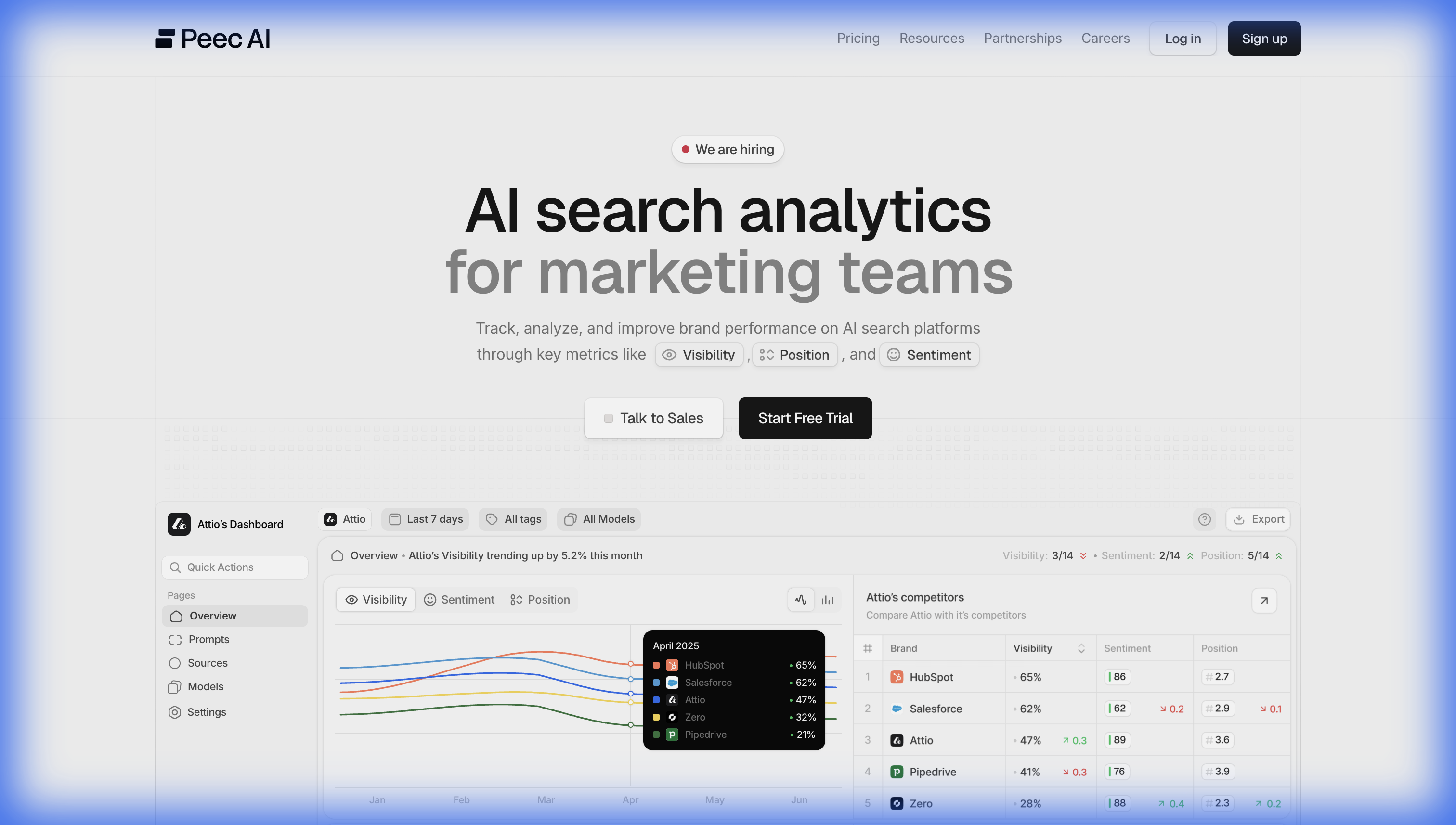
Best for: Teams focused on AI brand sentiment and competitive benchmarking.
Berlin-based Peec.ai emphasizes brand visibility analytics with a focus on sentiment analysis — not just whether AI mentions you, but how it talks about you. Their competitive benchmarking features help you compare your AI presence against specific competitors.
Pricing: Contact for pricing
Best for: Brand-focused teams, competitive intelligence
SE Ranking Visible
Best for: SE Ranking users who want AI visibility data alongside their existing SEO platform.
SE Ranking launched its "Visible" AI tracking product as an extension of their traditional SEO platform. Similar to Semrush's approach, this integrates AI visibility monitoring into an existing toolset.
Pricing: Part of SE Ranking plans
Best for: Existing SE Ranking users
Ahrefs Brand Radar
Best for: Combining AI mention tracking with Ahrefs' industry-leading backlink data.
Ahrefs has moved into AI visibility tracking with Brand Radar, which combines mention monitoring across AI platforms with their deep backlink and traditional SEO data. If you already use Ahrefs for link building and keyword research, this keeps everything in one ecosystem.
Pricing: Part of Ahrefs plans (starting ~$129/month)
Best for: Existing Ahrefs users, teams focused on link building + AI visibility
Best AI Content Optimization Tools
These tools help you create and structure content that AI systems are more likely to cite.
Surfer SEO
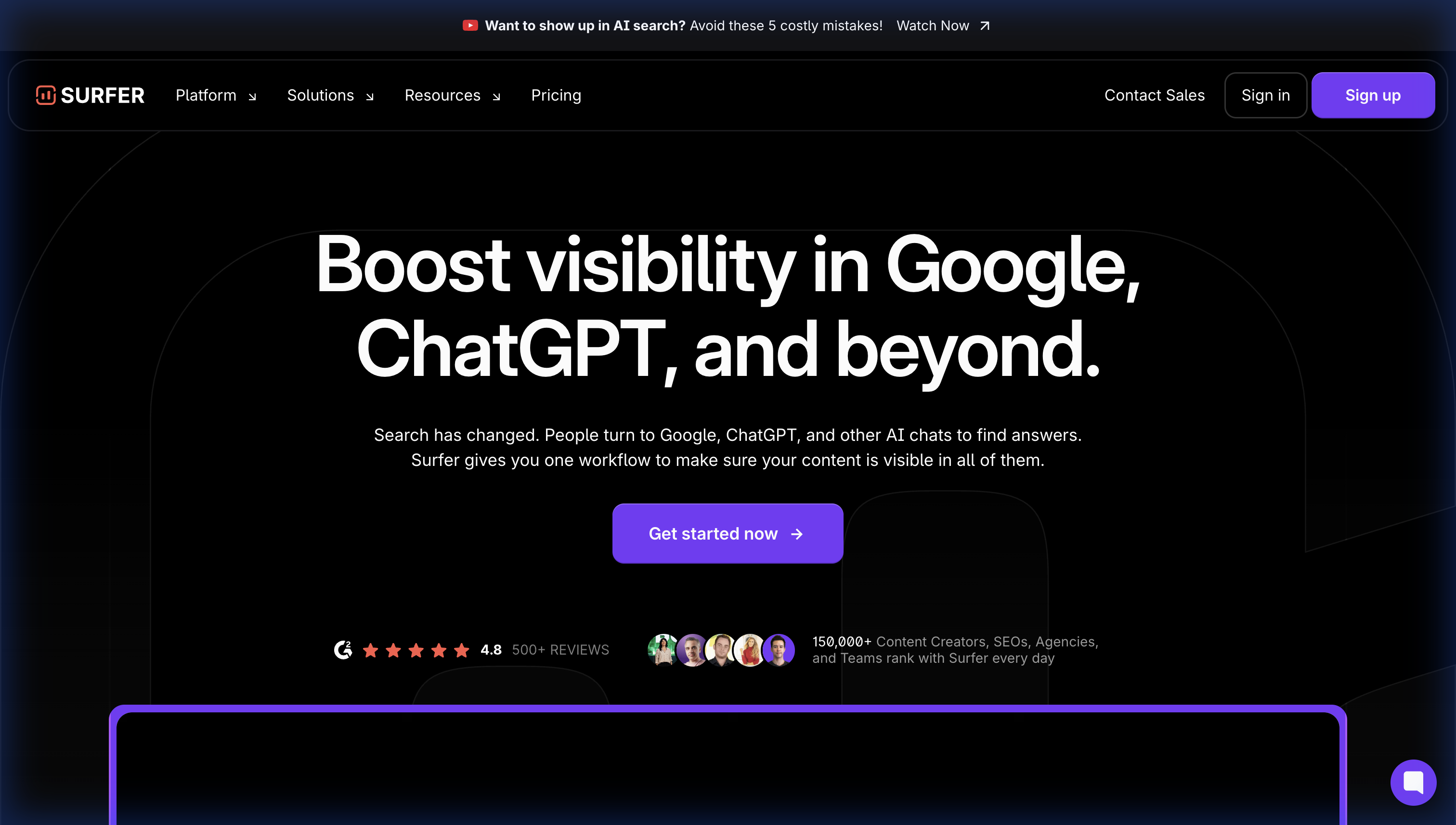
Best for: Content teams who need data-driven optimization with AI writing assistance.
Surfer analyzes top-ranking content for your target keywords and gives you specific recommendations — word count targets, terms to include, heading structure, and content score. It's particularly useful for ensuring your content is comprehensive enough to compete in both traditional and AI search results.
The AI writing assistant helps generate drafts based on SERP data, but the real value is the optimization scoring that tells you exactly what's missing from your content compared to what's currently ranking.
Pricing: From ~$89/month
Best for: Content teams producing regular blog posts and guides
Frase
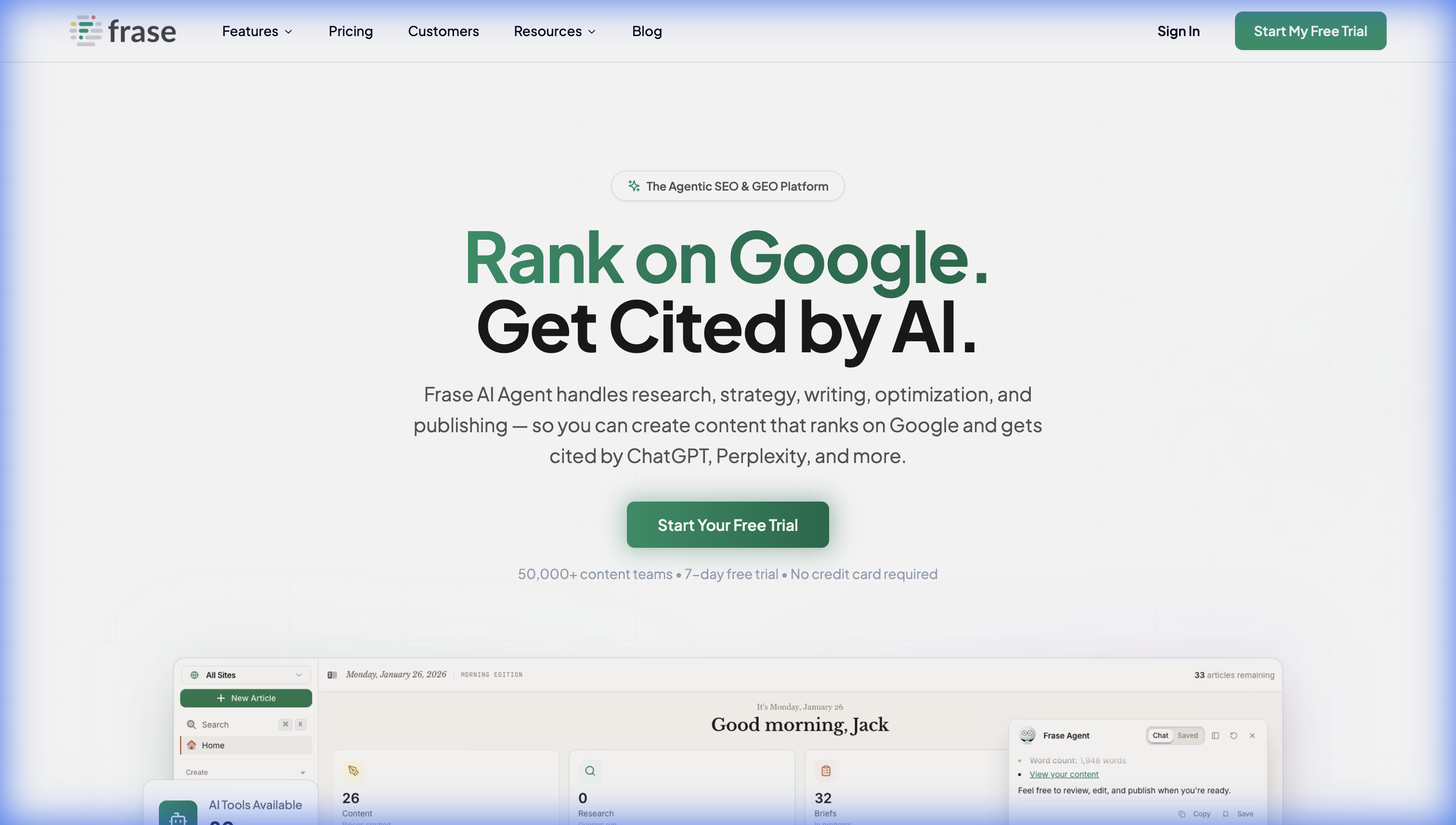
Best for: Teams that want SERP research, AI writing, and content optimization in one tool.
Frase combines SERP research (analyzing what's currently ranking), an AI writing assistant, and content optimization scoring. They've also moved into GEO (Generative Engine Optimization) territory, with features designed to help content get cited by AI platforms specifically.
Pricing: From ~$15/month
Best for: Smaller teams wanting an all-in-one content workflow
Clearscope
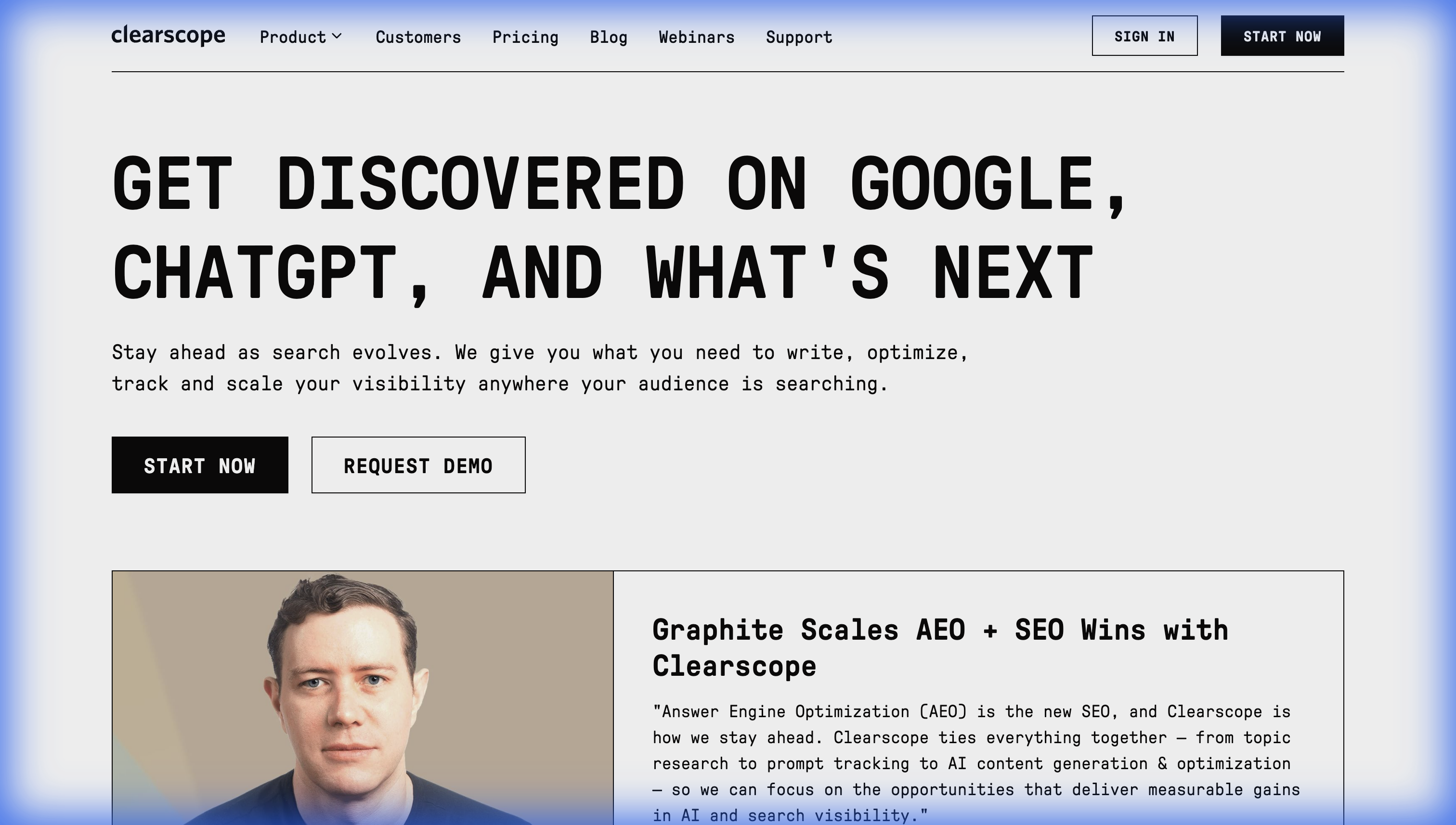
Best for: Enterprise teams focused on content quality and comprehensive topic coverage.
Clearscope is the premium option in this category, used by larger organizations that need high-accuracy, NLP-powered recommendations. The grading system (A++ to F) makes it easy for writers to understand exactly how well their content covers a topic.
The main difference from Surfer/Frase is depth of NLP analysis. Clearscope tends to be more accurate (but also more expensive) for complex, competitive topics.
Pricing: From ~$170/month
Best for: Enterprise, agencies, competitive niches
AirOps
Best for: Teams that need to scale AI content workflows across large content operations.
AirOps is less about individual article optimization and more about building AI-powered content workflows at scale. It helps automate content planning, research, and optimization across large numbers of pages — useful if you're managing hundreds or thousands of pages and need systematic optimization.
Pricing: Contact for pricing
Best for: Large content operations, enterprise SEO teams
Best AI Keyword & Prompt Research Tools
This category is the least mature of the three, but tools are emerging to help you understand how people search within AI platforms.
ZipTie
Best for: Transforming traditional SEO keywords into AI-optimized prompts.
ZipTie bridges the gap between traditional keyword research and AI search optimization. It takes your existing keyword targets and transforms them into the conversational prompts people actually use when querying AI platforms. It also provides content optimization recommendations based on what AI systems prioritize.
Pricing: Contact for pricing
Best for: SEO teams transitioning their keyword strategy for AI search
SparkToro
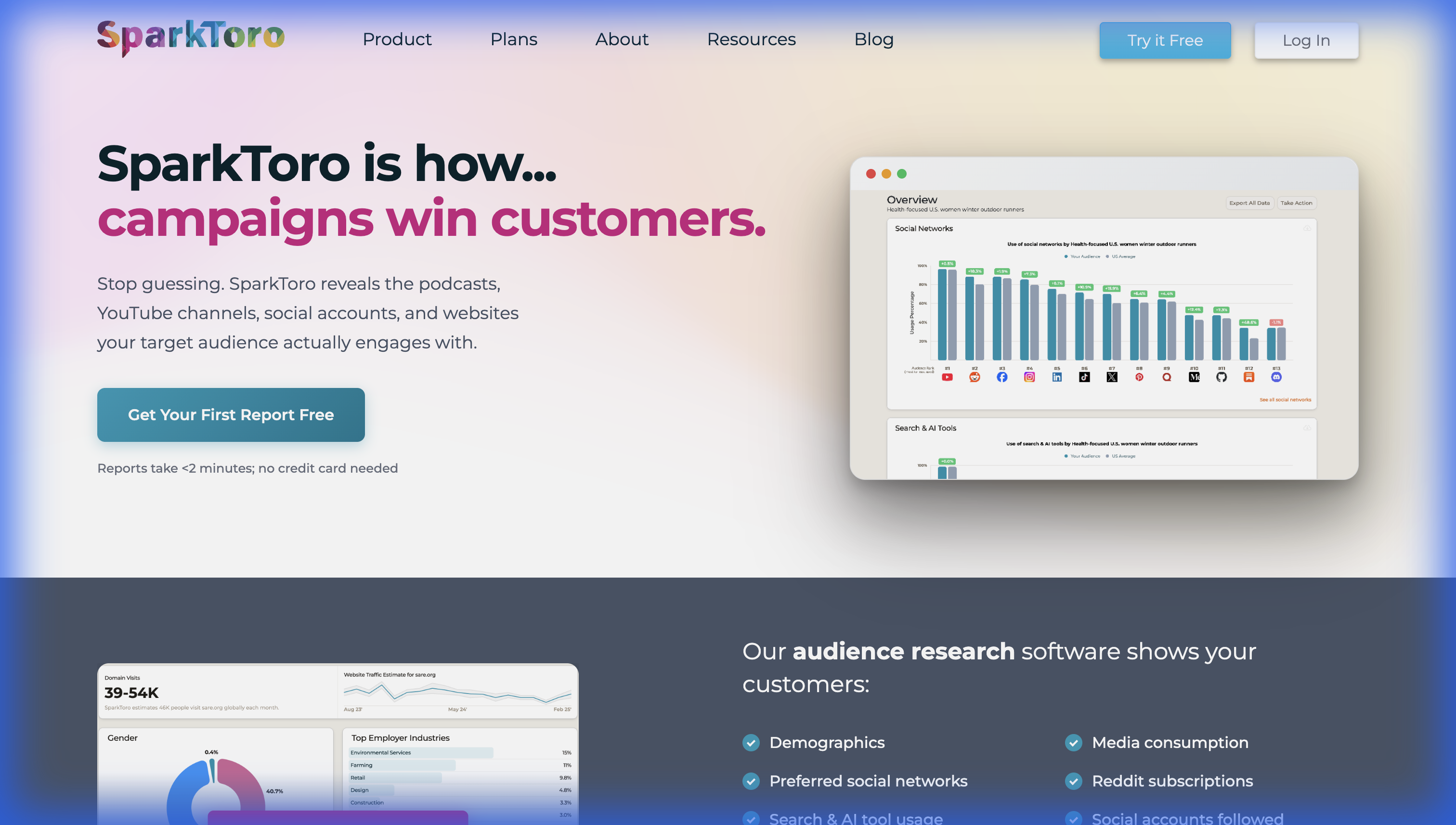
Best for: Understanding where your audience searches and what questions they ask.
SparkToro isn't exclusively an AI SEO tool, but its audience intelligence data is valuable for understanding search behavior patterns. It helps you discover where your target audience spends time online, what topics they engage with, and what questions they're asking — insights that inform both traditional and AI search content strategies.
Pricing: Free plan available; paid plans from ~$50/month
Best for: Audience research and content strategy planning
AlsoAsked / AnswerThePublic
Best for: Discovering question-based queries that mirror how people ask AI systems.
These tools mine "People Also Ask" data and question patterns from search engines. Since AI queries tend to be question-formatted and conversational, the question data from these tools serves as a useful proxy for understanding what people might ask ChatGPT or Perplexity.
Pricing: Free tiers available
Best for: Content ideation, understanding question patterns
Free AI SEO Tools Worth Trying
You don't need a large budget to get started with AI SEO. These free tools cover the fundamentals:
Am I Visible on AI? — Free diagnostic that checks whether AI crawlers can access your site, analyzes your content structure for AI readability, and identifies technical issues blocking AI visibility. A good starting point before investing in paid tools.
Google Search Console — Google's free tool now shows data on AI Overview appearances. Check Performance reports to see which queries trigger AI Overviews for your content.
Schema.org Validator — Free tool for testing your structured data implementation. Schema markup (FAQ, HowTo, Article, Product) helps AI systems understand your content's context and structure. Proper schema doesn't guarantee AI citations, but missing schema is a missed opportunity.
Google's Rich Results Test — Tests whether your structured data is correctly implemented and eligible for enhanced search results, including AI Overviews.
Robots.txt Tester (via Search Console) — Check whether your robots.txt is accidentally blocking AI crawlers like GPTBot, ClaudeBot, or PerplexityBot. This is one of the most common and easily fixable AI visibility problems.
AI SEO Tool Comparison Table
Here's a quick reference comparing all the tools covered in this guide:
| Tool | Category | Pricing | Best For |
|---|---|---|---|
| Am I Visible on AI? | Readiness Audit | Free | Technical + content readiness (not citation tracking) |
| Semrush | Visibility | ~$130/mo | Existing Semrush users, larger teams |
| Otterly.ai | Visibility | From $29/mo | Dedicated AI monitoring, mid-market pricing |
| Peec.ai | Visibility | Contact | Brand sentiment, competitive benchmarking |
| Ahrefs | Visibility | ~$129/mo | Existing Ahrefs users, link building + AI |
| Surfer SEO | Content | ~$89/mo | Data-driven content optimization |
| Frase | Content | ~$15/mo | All-in-one content workflow |
| Clearscope | Content | ~$170/mo | Enterprise NLP accuracy |
| SparkToro | Keyword | Free / ~$50/mo | Audience research |
| AlsoAsked | Keyword | Free tier | Question discovery |
Related Reading
How to Choose the Right AI SEO Tool
The right tool depends on what you're trying to accomplish, not which tool has the most features.
Start with diagnostics. Before spending money on ongoing monitoring, find out whether you have basic technical problems blocking AI visibility. A free check with Am I Visible on AI? or a manual review of your robots.txt can reveal issues that make paid tools pointless until they're fixed. There's no point monitoring your AI mentions if AI crawlers can't access your site in the first place.
Match the tool to your primary need. If you want to know whether AI is mentioning your brand, you need a visibility tracking tool — not a content optimizer. If your content isn't getting cited despite good visibility, you need a content optimization tool. If you're planning what to write next, you need keyword and prompt research.
Consider your existing stack. If you already use Semrush or Ahrefs, their built-in AI visibility features avoid adding another subscription. If you don't use either, a dedicated tool like Otterly.ai may give you better AI-specific features at a lower price point.
Budget realities:
- Free: Am I Visible on AI? + Google Search Console + Schema Validator covers the basics
- $30-100/month: Dedicated tools like Otterly, Frase, or Surfer for specific needs
- $130+/month: Integrated platforms like Semrush or Ahrefs that combine AI visibility with traditional SEO
The AI Search Landscape: What the Data Actually Shows
There's a lot of hype around AI search, and not all of it holds up to scrutiny. Here's what the verified data says as of early 2026:
AI search usage is massive and growing. ChatGPT has over 800 million weekly active users. Google AI Overviews appear on 18% of global searches and reach 2 billion monthly users. Perplexity has 22 million monthly active users. These platforms process billions of queries daily, and a meaningful portion of those queries are the kind that used to happen in Google Search.
But AI referral traffic to websites is still small. According to Conductor's November 2025 data, AI referral traffic accounts for roughly 1% of total website traffic, with ChatGPT driving about 87% of that. The 527% year-over-year growth figure that gets cited everywhere is real — it comes from Previsible's study of 19 GA4 properties comparing January-May 2025 to the same period in 2024. But 527% growth on a small base is still a small number in absolute terms.
AI traffic converts dramatically better. This is the most compelling data point. Ahrefs found that AI search visitors generated 12.1% of signups despite accounting for only 0.5% of traffic — converting 23x better than traditional organic visitors. Other studies show AI search traffic converting at 14.2% compared to Google's 2.8%. People who click through from an AI recommendation arrive with higher intent and more context.
The prediction landscape is mixed. Gartner predicted in February 2024 that traditional search engine volume would drop 25% by 2026. We're in 2026 now, and while the directional trend is correct — AI is capturing search share — the 25% figure appears aggressive. Google Search still processes over 16 billion searches per day and maintains roughly 90% search market share. The shift is real but more gradual than the most aggressive predictions suggested.
What this means for your strategy: AI search is a high-quality, fast-growing channel that's still early enough to establish positioning without massive investment. The companies building AI visibility now are creating compound advantages — every citation builds authority, which increases future citation probability. But abandoning traditional SEO for AI-only optimization would be premature. The smart play is optimizing for both simultaneously.
What We've Learned From Scanning 10,000+ Websites
Running an AI visibility checker across thousands of sites has given us a unique perspective on where most websites stand. Here are the patterns we consistently see:
Blocked AI crawlers are the most common problem. A surprising number of websites have robots.txt configurations that block GPTBot, ClaudeBot, or PerplexityBot — often unintentionally. Some inherited these blocks from default CMS configurations or security plugins. It's the easiest fix with the highest impact: if AI crawlers can't access your content, nothing else matters.
Structured data is widely underutilized. Most sites we scan have minimal or no schema markup. FAQ schema, Article schema, HowTo schema, and Product schema all help AI systems understand your content's context and structure. Implementing basic structured data is a one-time effort that improves both AI visibility and traditional search performance.
Content structure matters more than content volume. Sites with fewer but well-structured pages (clear heading hierarchies, semantic HTML, organized sections) tend to score higher on AI readability than sites with hundreds of poorly structured pages. AI systems extract answers from content — if your content is a wall of text without clear organization, AI will struggle to pull useful information from it.
The technical basics are still the foundation. HTTPS, working sitemaps, fast load times, and mobile-friendly design aren't just Google ranking factors — they're signals that AI crawlers use to evaluate site quality and trustworthiness. Getting the fundamentals right is the prerequisite for everything else.
What's Next
AI search is evolving fast. Google AI Overviews are expanding in coverage and sophistication. ChatGPT's web search capabilities are improving with every update. New AI search platforms continue to emerge. The tools and strategies in this guide will evolve as the landscape changes, and we'll keep this page updated as significant developments happen.
The one constant: websites that are technically accessible, well-structured, and genuinely useful to readers will perform well in both traditional and AI search. The tools in this guide help you measure, optimize, and track your progress — but the foundation is always quality content that serves your audience.
Want to see where your site stands? Check your AI visibility score for free — it takes 30 seconds and identifies the specific issues blocking your AI discoverability.